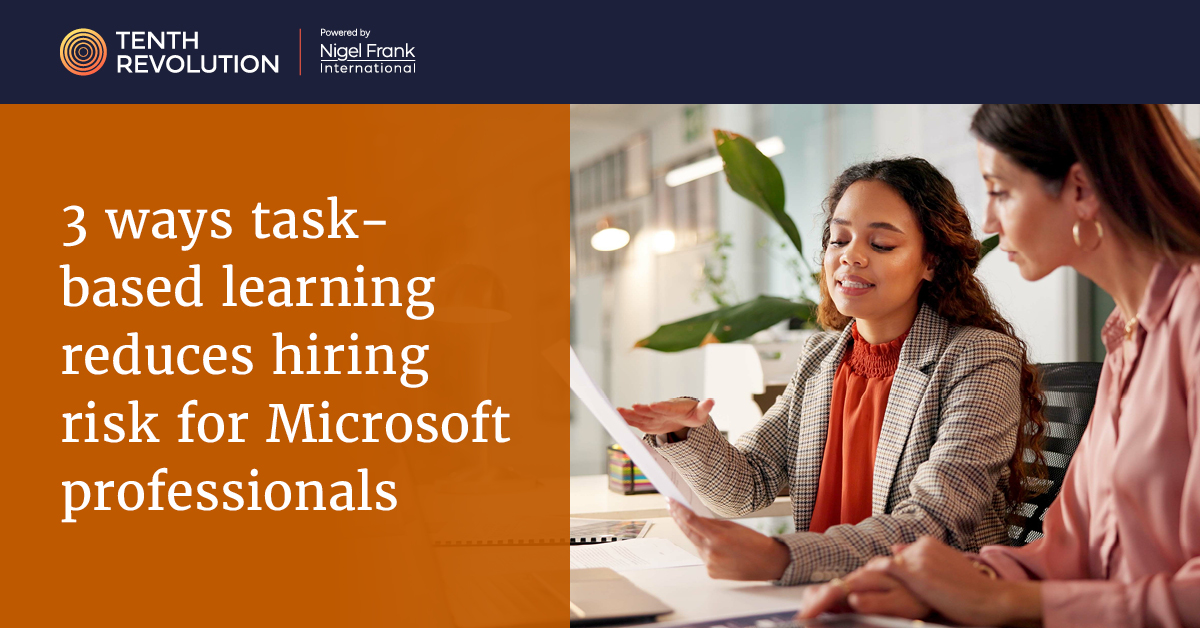
Hiring risk rises when employers rely on broad credentials that don’t show how people perform real work.
Microsoft roles now demand practical delivery. Dynamics 365 and the Power Platform change often. Teams build, adjust, and release work continuously. Task-based learning reflects this reality. It shows how candidates handle real scenarios instead of testing what they remember.
This shift helps employers reduce risk before a hire starts. It also improves onboarding, team confidence, and long-term retention.
Why hiring risk looks different today
Dynamics and Power Platform projects rarely fail because people lack knowledge. They fail when people struggle with execution. Missed steps, unclear data handling, or weak review habits cause delays and rework.
Traditional exams rarely surface these issues. Task-based learning does. It places candidates in realistic situations and shows how they respond. That insight helps hiring managers make better decisions earlier in the process.
Way one: proof of delivery replaces assumption
Task-based learning shows what a candidate can deliver. A badge reflects a completed task, not a passed theory test.
This matters during screening. Hiring managers can see whether a candidate built a flow, configured a journey, or handled data correctly. The focus moves from potential to evidence.
This clarity reduces early-stage risk. Teams avoid hiring people who interview well but struggle with daily work.
Access to experienced Dynamics 365 and Power Platform professionals helps reinforce this approach, because seasoned candidates often bring task-level proof alongside broader experience.
Way two: misalignment surfaces before onboarding
Many hiring issues appear only after someone joins. The work doesn’t match expectations. The role feels different from the interview. Task-based learning helps surface this gap sooner.
Candidates who complete real scenarios understand what the job involves. Hiring managers understand how the candidate works. This shared clarity reduces early exits and frustration on both sides.
It also supports better role design. Employers can align job descriptions with the tasks that matter most instead of listing generic requirements.
Way three: teams spot training needs earlier
Task-based learning doesn’t just reduce hiring risk. It improves development planning. Hiring managers can see where a candidate performs well and where support may help.
This allows teams to plan onboarding with purpose. They focus training on gaps that matter instead of repeating content the candidate already knows. This speeds up contribution and builds confidence.
The Nigel Frank Microsoft Careers and Hiring Guide reports that 89% of Microsoft professionals believe certification improves job performance. Task-based learning strengthens this impact because it ties learning directly to delivery.
Teams that invest in this approach see steadier performance and fewer surprises.
How task-based learning supports long-term team health
Reducing hiring risk has ripple effects. Teams spend less time correcting mistakes. Senior staff spend less time rescuing projects. New hires settle faster because expectations are clear.
Over time, this creates a healthier delivery culture. People know what good work looks like. They understand how tasks connect. They learn from real scenarios instead of abstract examples.
This approach supports scale. As teams grow, consistency matters more than speed alone. Task-based learning helps teams maintain quality without slowing delivery.