Microsoft platforms are moving through a decisive shift.
Dynamics 365, Power Platform and cloud ERP are no longer primarily transformation tools. They are now core operational systems that support revenue, supply chains, finance and customer experience at scale.
As a result, hiring strategies across the Microsoft ecosystem are changing quickly. Organizations are prioritizing different skills, different levels of accountability, and different leadership profiles than they were even a year ago.
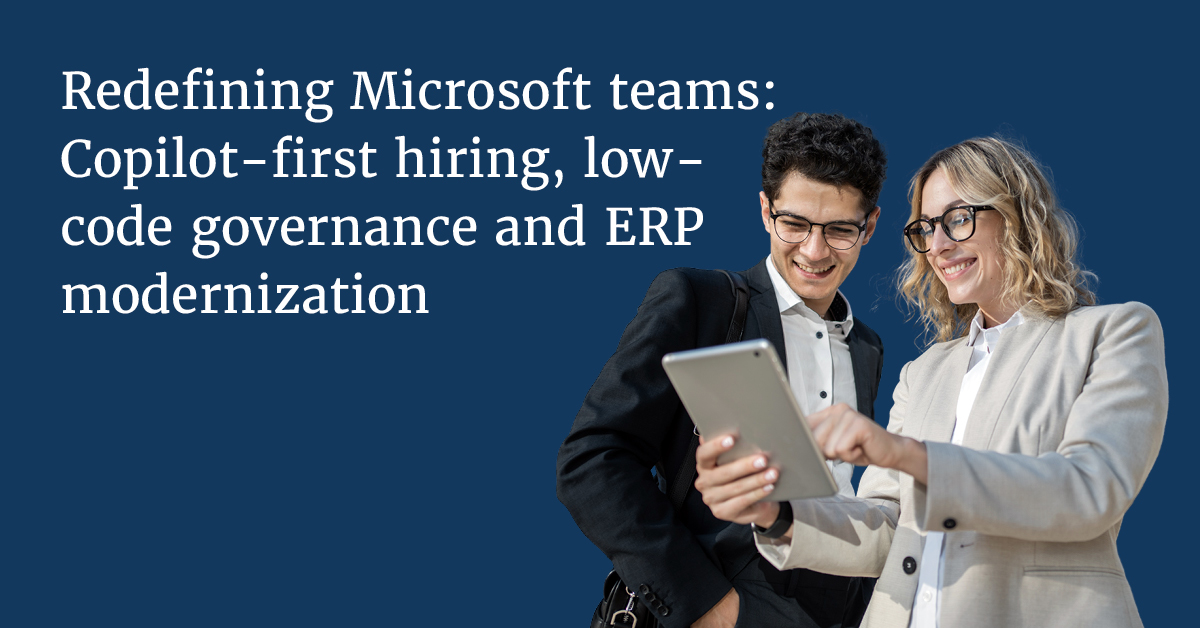
Three themes are shaping this shift most clearly:
- Copilot-first delivery expectations across Dynamics 365 and Power Platform.
- Formalized governance teams for low-code platforms.
- Accelerating ERP modernization to Dynamics 365 Finance & Supply Chain Management and Business Central.
Individually, each trend creates pressure on hiring. Together, they are reshaping what strong Microsoft teams look like and why experienced talent is becoming harder to secure.
Copilot-first delivery is changing who organizations hire
Microsoft Copilot is now embedded across Dynamics 365 and Power Platform, supporting everything from CRM workflows to low-code development. For most organizations, this means AI is no longer a specialist capability. It is part of everyday delivery.
Copilot assists with solution design, data insights, content generation, automation logic and application build. What it does not do is remove accountability. The person approving the output still owns the outcome.
This has direct implications for hiring. Employers are increasingly prioritizing AI-literate functional consultants, solution architects and product owners who understand how Copilot fits into real business processes.
These professionals know key things, such as:
- How to apply business context
- How to validate AI-generated outputs
- How tomanage risk rather than simply executing tasks faster
For executives, the key point is that Copilot-first hiring is not about recruiting AI engineers. It is about hiring Microsoft professionals who can work confidently alongside AI while protecting customer trust, data integrity and operational outcomes.
Organizations that fail to recognize this shift often experience friction. Roles attract candidates who are comfortable using tools but not owning decisions. Over time, this misalignment slows adoption and weakens returns on AI investment.
The technology is powerful, but success still depends on people. Nigel Frank connects organizations with Dynamics 365 and Power Platform professionals who can design, deploy and govern Copilot-enabled solutions in a way that delivers reliable business outcomes.
Low-code governance is becoming a leadership function
Power Platform adoption tends to accelerate quickly. Early success comes from speed. Teams build apps and automations that solve immediate problems, leaving business users feeling empowered. Productivity improves too.
As usage grows, complexity follows, environments multiply, data exposure increases. Ownership can becomes unclear and without structure, risk surfaces after deployment rather than before.
This is why enterprises are now formalizing low-code governance with dedicated Power Platform Platform teams and Centers of Excellence. These teams are responsible for defining standards, reviewing solutions, managing environments and supporting makers across the business.
The roles driving this shift include Power Platform CoE Leads, Platform Administrators and governance-focused Solution Architects. Their job is not to slow delivery. It is to enable it safely.
Strong governance clarifies how decisions are made. Makers build faster when rules are clear. Security teams gain confidence when ownership is defined. Leaders reduce risk without sacrificing innovation.
From a hiring perspective, these roles are becoming both more senior and harder to fill. They require technical depth, stakeholder influence and an understanding of how low-code platforms operate at enterprise scale.
Organizations that invest in governance leadership early tend to scale Power Platform more confidently. Those that delay often find themselves hiring reactively after issues appear.
ERP modernization is intensifying the talent shortage
Alongside CRM and low-code change, cloud ERP modernization is accelerating. Organizations are moving from legacy systems to Dynamics 365 Finance & Supply Chain Management and Business Central to gain better visibility, control and scalability across finance and operations.
Dynamics 365 Finance & Supply Chain Management supports complex enterprise environments, including global finance, procurement, manufacturing and logistics. Business Central serves small and mid-sized organizations looking to modernize financial management, inventory and operations without excessive complexity.
In both cases, modernization introduces risk if not handled correctly. ERP systems sit at the center of the business. Decisions made during design and implementation affect cash flow, compliance, supply continuity and reporting.
This is driving acute shortages of senior functional consultants and solution architects who understand both the technology and the business processes it supports. These professionals translate operational needs into system design, guide change management and protect continuity during migration.
According to the Nigel Frank Microsoft Careers and Hiring Guide, demand for experienced Microsoft ERP professionals continues to outpace supply, particularly at senior levels. This imbalance is making ERP modernization one of the most competitive hiring areas in the ecosystem.
Organizations that underestimate this challenge often face delayed projects, rising costs, and increased dependency on external support. Those that secure the right expertise early reduce risk and accelerate time to value.
Nigel Frank supports ERP modernization by connecting organizations with Dynamics 365 Finance & Supply Chain Management and Business Central experts who can lead complex implementations with confidence and clarity.
Why these trends point to the same hiring reality
Copilot-first delivery, formalized low-code governance and ERP modernization may appear separate, but they share a common thread.
Microsoft platforms are no longer peripheral systems. They run core business operations. That reality shifts hiring away from task execution and toward ownership, judgment and leadership.
Roles now carry responsibility for AI-assisted decisions, platform risk and enterprise-wide outcomes. When hiring strategies fail to reflect that responsibility, organizations feel the impact through slower delivery, harder hiring and weaker retention.
Those that adapt build teams capable of scaling technology safely and sustainably.
Microsoft platforms are evolving quickly, and the cost of hiring misalignment is rising just as fast.