Microsoft Dynamics 365 and Power Platform teams are entering a new phase of maturity.
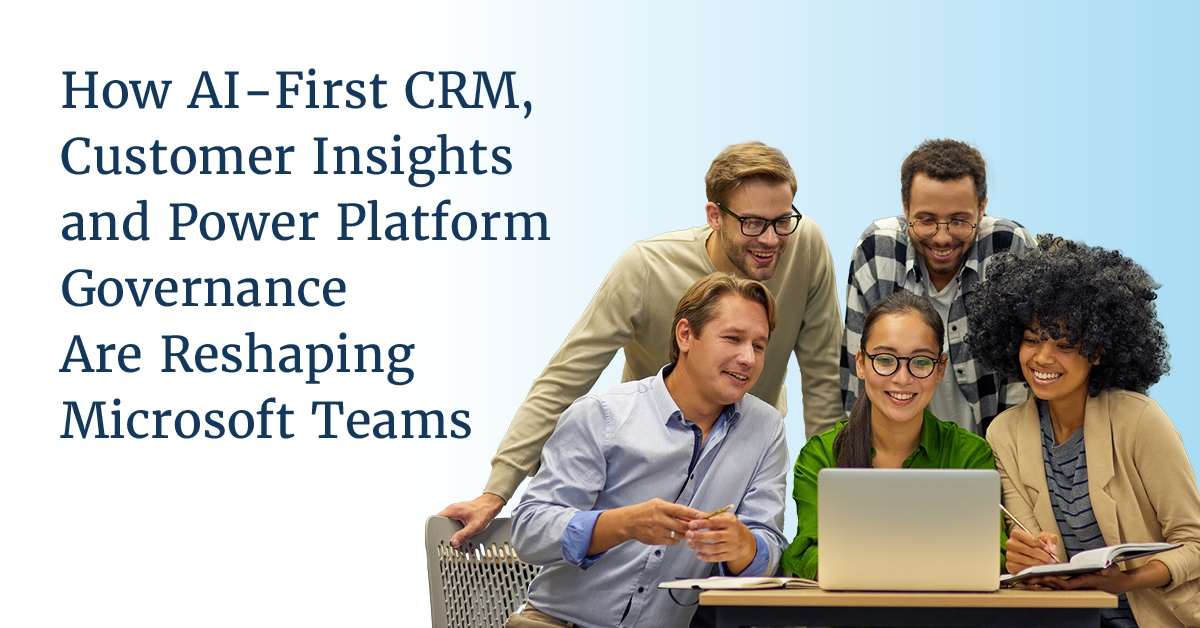
What began as productivity tooling and low-code acceleration has evolved into something more strategic. AI is now embedded in day-to-day delivery. Customer data and engagement are converging into shared platforms, while low-code solutions are running core business processes at enterprise scale.
For business leaders and hiring managers, this creates a new challenge. The technology itself is powerful, but the way teams are structured, hired and led has not always kept pace. Organizations that continue to hire based on yesterday’s role definitions often struggle to realise the value these platforms promise.
Across Dynamics 365 and Power Platform hiring, three connected trends are shaping what successful teams look like today:
- AI-first delivery expectations.
- Customer Insights-led CRM ownership.
- Enterprise-grade governance as a growth enabler rather than a blocker.
Taken together, they point to a clear conclusion that hiring strategy now plays a direct role in whether Microsoft platform investments, deliver real business outcomes.
AI-first hiring is changing accountability across Microsoft teams
Microsoft Copilot is no longer an emerging capability. It is embedded across Dynamics 365 and Power Platform, supporting sales engagement, service responses, marketing journeys and low-code app development.
In simple terms, Copilot handles the first draft. People own the outcome:
- Sales teams review AI-generated outreach before it reaches customers.
- Service teams approve summaries and suggested responses.
- Marketing teams oversee AI-assisted journeys.
- Power Platform teams deploy apps faster using copiloted build tools.
In every case, responsibility still sits with the human
This shift has meaningful implications for hiring as many roles now require stronger judgment, risk awareness and decision-making than they did before. Output volume matters less than confidence in approving AI-assisted work that affects customers, data and revenue.
For executives, the key takeaway is that using AI successfully is not about deploying Copilot alone. It depends on hiring professionals who understand when to trust AI, when to challenge it and how to apply it responsibly within real business constraints.
Organizations that recognise this are already adjusting how they assess candidates. Those that do not often find roles harder to fill, offers declined or new hires disengaging once accountability becomes clear.
The technology is advancing quickly. Nigel Frank helps organizations hire Microsoft professionals who can operate confidently in AI-first environments, balancing speed with responsibility so AI investments translate into measurable business value.
Customer Insights is redefining CRM and marketing ownership
As Dynamics 365 Marketing transitions into Customer Insights, the traditional divide between CRM and marketing teams is narrowing.
Customer Insights brings together data, segmentation and journey orchestration in one platform. Sales, service and marketing teams increasingly work from the same customer profiles and signals. Decisions made in one area now have immediate consequences elsewhere.
This convergence changes hiring requirements in practical ways. Organizations need professionals who understand how data quality affects journeys, how segmentation influences revenue outcomes and how consent and identity rules protect trust. These roles are less about executing campaigns and more about owning the end-to-end customer experience.
From a leadership perspective, this often surfaces as friction. CRM teams and marketing teams may each assume ownership of parts of the customer journey without clear accountability across the whole. Without the right people in place, adoption slows and value leaks away through duplicated effort or misaligned decisions.
Hiring professionals who can bridge these functions helps remove that friction. It creates clearer ownership, faster decision-making and more consistent customer experiences.
According to the Nigel Frank Microsoft Careers and Hiring Guide, demand continues to rise for Microsoft professionals who combine platform knowledge with broader business and data accountability. This reflects a wider shift toward roles that connect systems, teams and outcomes rather than operating in isolation.
Enterprise Power Platform adoption is driving governance leadership
Power Platform success rarely breaks at the start. It breaks after scale.
Early adoption often feels effortless. Teams build apps quickly. Automations replace manual steps. Business users feel empowered. Over time, environments grow. Data exposure increases. Ownership becomes unclear. Security and compliance questions surface later than they should.
This is why governance-focused hiring has become critical.
Roles such as Power Platform CoE Leads, Platform Administrators and Solution Architects with governance experience help organisations scale safely. They define standards, review processes and escalation paths that protect the platform without slowing delivery.
Strong governance does not create friction, it removes uncertainty. Makers build faster when rules are clear, leaders gain confidence when ownership is defined and security teams engage earlier rather than reacting later.
Power Platform investments deliver more predictable returns when governance is designed by people who understand both the technology and the business. Nigel Frank connects organizations with Power Platform leaders who enable scale without sacrificing control.
Why these trends demand a rethink of hiring strategy
AI-first delivery, Customer Insights convergence and enterprise Power Platform governance all point to the same underlying shift. Microsoft teams are moving away from task-based execution toward outcome ownership.
Roles increasingly carry responsibility for decisions that affect customers, data integrity and operational risk. When compensation, job design or hiring criteria fail to reflect that reality, problems follow. Hiring slows. Retention suffers. Delivery confidence drops.
Organizations that align hiring strategy with how work is actually performed gain an advantage. They build teams that adapt faster, adopt new capabilities sooner and extract value from Microsoft platforms more consistently.
Those that do not often end up revisiting the same challenges repeatedly, not because the technology failed but because the team structure did not support it.
The role of specialist hiring partners
For business leaders, navigating these shifts internally can be difficult. Job titles lag behind reality. Skill requirements blur across functions. Market competition intensifies for professionals who combine technical capability with accountability and judgment.
This is where specialist recruitment matters.
Nigel Frank works exclusively within the Microsoft ecosystem, partnering with organizations to translate platform strategy into hiring outcomes. By understanding how Dynamics 365 and Power Platform roles are evolving in practice, not just on paper, Nigel Frank helps leaders build teams that deliver both speed and stability.
If your Microsoft platform strategy feels ahead of your hiring model, it may be time to realign the two. Nigel Frank supports organizations in identifying and securing the talent needed to scale AI-driven CRM and Power Platform initiatives with confidence.