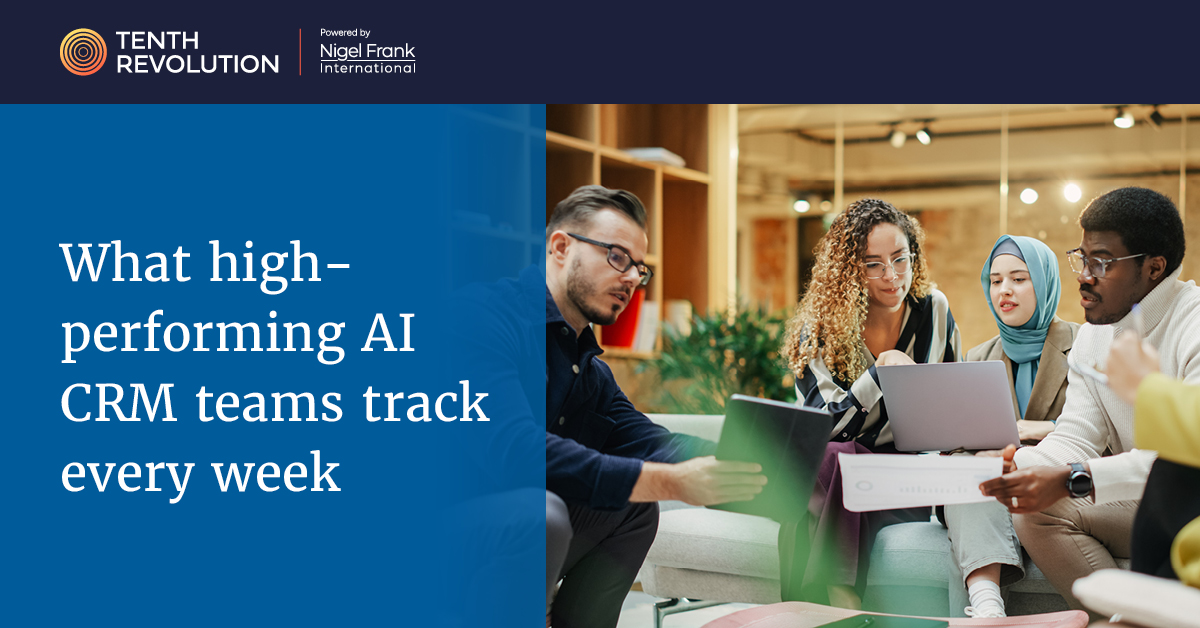
High-performing AI CRM teams don’t guess whether Copilot is working, they track clear signals that show whether AI improves outcomes or creates noise.
AI now sits inside Dynamics 365 sales, service, and marketing workflows. Copilot drafts emails, summarizes cases, suggests next actions, and supports agents during live interactions. These features promise speed, but speed alone does not equal value. Teams that perform well know this. They track a small set of indicators each week to understand whether AI supports customers and staff or quietly adds risk.
This weekly rhythm separates teams that feel confident about AI from those that feel reactive. It also shapes hiring priorities, because the people who track outcomes well are rarely the same people who only build features.
Why weekly tracking matters more than feature counts
Many organizations focus on what Copilot can do. High-performing teams focus on what actually happens after it is used. Weekly tracking keeps AI grounded in real work. It reveals patterns early and gives teams time to adjust before small issues grow into customer-facing problems.
AI tools work across shared data. One poor signal can travel fast. Weekly checks slow that spread. They help teams stay in control while adoption grows across departments.
Signal one: acceptance versus override rates
One of the most useful signals is simple. How often do users accept Copilot suggestions, and how often do they change them.
High acceptance paired with low correction often shows good alignment between data, prompts, and process. High override rates point to gaps. The issue may sit in data quality, prompt design, or unclear rules. Teams that track this weekly can isolate the cause before trust drops.
This signal also highlights training needs. If one team overrides far more than another, the problem may not be the tool. It may be how people were taught to use it.
Signal two: time saved versus time reviewed
AI promises time savings, but review still takes effort. Strong teams track how much time users save and how much time they spend checking output.
If review time climbs each week, something is wrong. The AI may produce text that feels off. It may miss context. It may pull from the wrong fields. Weekly tracking helps teams rebalance.
This signal also shapes hiring. Teams need people who review quickly and accurately. That skill matters more than raw build speed in an AI-supported CRM environment.
This is where access to experienced Dynamics 365 and Power Platform professionals makes a difference, because seasoned users spot issues faster and correct them with less friction.
Signal three: customer response patterns
AI touches customers directly. High-performing teams track how customers respond after AI-assisted interactions.
They look at reply rates, follow-up actions, and case reopenings. They compare AI-assisted messages with manually written ones. Weekly patterns reveal whether AI improves clarity or creates confusion.
Small shifts matter. A slight rise in reopened cases can signal that summaries miss details. A drop in reply rates can point to tone problems. These signals help teams adjust prompts and guardrails without pausing adoption.
Signal four: data corrections tied to AI use
AI exposes data problems faster than manual work. Teams that perform well track how many records users correct after AI suggestions.
A rise in corrections shows where data quality needs attention. It may reveal fields that no one trusted before AI surfaced them. Weekly tracking turns frustration into insight.
This matters for leadership, too. The Nigel Frank Microsoft Careers and Hiring Guide shows that 78% of Microsoft professionals rate data accuracy as the most important factor in CRM success. AI amplifies this priority because it depends on every detail.
Teams that act on this signal strengthen both AI output and long-term CRM health.
Signal five: escalation and exception volume
High-performing teams track how often AI-assisted work triggers escalations or exceptions. These include compliance checks, privacy concerns, or manual approvals that stop a process.
A steady level is normal. A rising level shows misalignment between AI output and business rules. Weekly tracking helps teams refine governance before controls tighten too late.
This signal also highlights the need for AI-aware governance roles. People who understand process, policy, and customer impact help teams keep AI useful without slowing delivery.
How these signals shape team design
Tracking is not just an operational habit. It shapes which teams hire.
Teams that track outcomes weekly value people who can interpret patterns, explain trade-offs, and adjust workflows calmly. They look for candidates who understand CRM context and can work with AI rather than around it.
This often shifts hiring away from narrow build roles toward broader product and governance profiles. These hires support scale because they help teams learn, not just deploy.
Organizations that build teams around these signals tend to adapt faster. They improve steadily instead of reacting to complaints or audits.
Why this tracking cadence builds confidence
Weekly tracking creates shared language across sales, service, marketing, and platform teams. Everyone sees the same signals. Everyone understands what good looks like this week, not six months later.
This cadence builds trust in AI. Users feel heard when issues surface quickly. Leaders feel confident scaling features because controls are visible. Customers benefit from clearer communication and fewer mistakes.
High-performing AI CRM teams do not rely on promises. They rely on patterns they can see and explain.